Teatro Rossini of Lugo
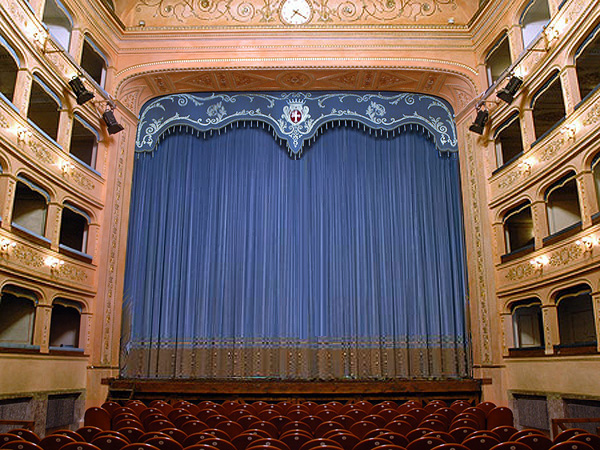
Photo © Teatro Rossini di Lugo
The curtain made of FOT - Otello velvet with NDA - Decorative appliqués and endowed with a Traveller curtain and a Swag curtain, is so described by the great scenographer of Modena Koki Fregni (1930-1994), who planned stage technique works renewed during the restauration.
«The top and the curtain, surely manufactured in the period among the two wars, showed such a poverty of materials and executions ...»
«The top and the curtain, surely manufactured in the period among the two wars, showed such a poverty of materials and executions ...»
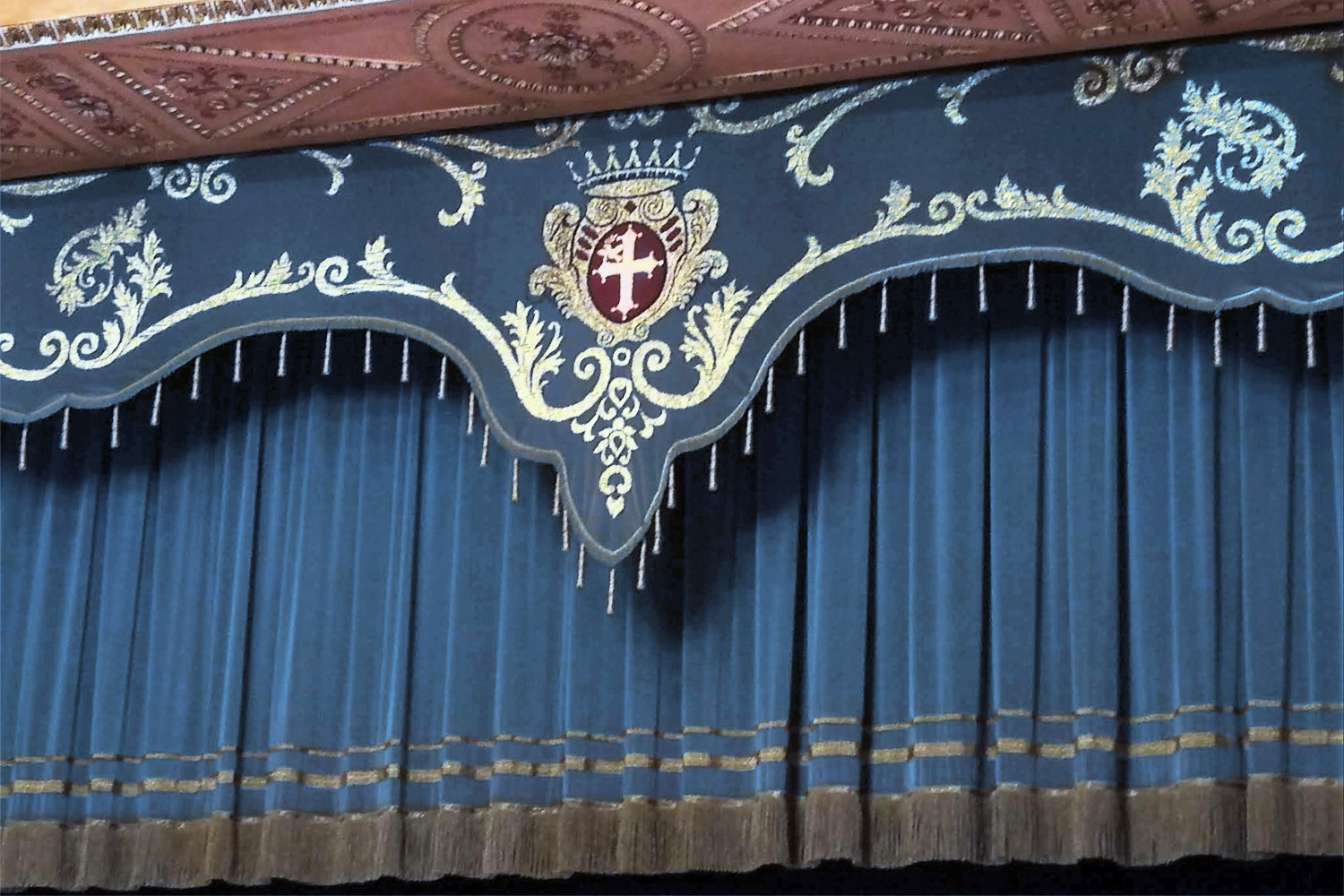
Photo © Teatro Rossini di Lugo
«... that it would have been absurd to propose them again.
It was done then a careful analysis and new materials were introduced, for safety reasons too.
The painted ornament were replaced with the embroidered ornament. The heraldry of the town was done with an embroidered relief and NFR - Fringes and NAG - Agremani and NFI - Tassels were applied with moderation, also not to overwhelm the sobriety that luckily belongs to the hall.»
It was done then a careful analysis and new materials were introduced, for safety reasons too.
The painted ornament were replaced with the embroidered ornament. The heraldry of the town was done with an embroidered relief and NFR - Fringes and NAG - Agremani and NFI - Tassels were applied with moderation, also not to overwhelm the sobriety that luckily belongs to the hall.»
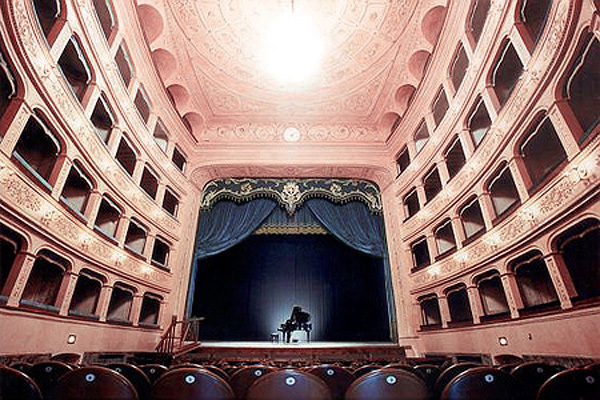
Photo © Teatro Rossini di Lugo
«We decided to use a silent engine with variable speed to allow a swag or imperial opening, as it is the tradition in Italian opera theatre (how many have repented because of having abandoned this wonderful opening). Simultaneously and with the same means, it is possible also a traveller opening, much more suited to prose performances.»
The Swag curtain is endowed with a varying speed automatism system ...
The Swag curtain is endowed with a varying speed automatism system ...
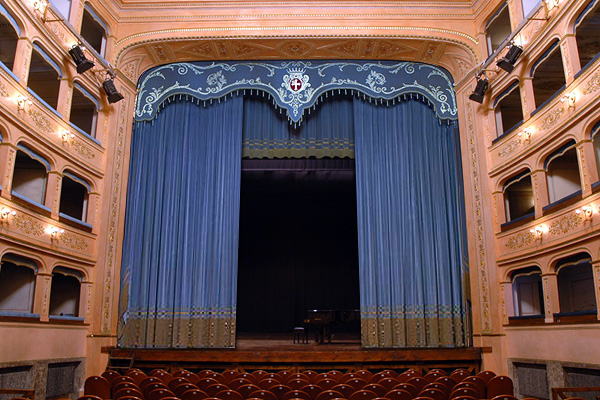
Photo © Teatro Rossini di Lugo
... while the Traveller curtain is realized with a Laser track.
The curtain is opened on the Stage masking made of black COS - Oscurante molton.
Pier Luigi Cervellati, professor at the Faculty of Architecture of Venice, at the end of the works declared the principles of inspiration of the guidelines of what, more than a restoration, for the fidelity that was given to the pre-existing situation at the moment of the restoration ...
The curtain is opened on the Stage masking made of black COS - Oscurante molton.
Pier Luigi Cervellati, professor at the Faculty of Architecture of Venice, at the end of the works declared the principles of inspiration of the guidelines of what, more than a restoration, for the fidelity that was given to the pre-existing situation at the moment of the restoration ...
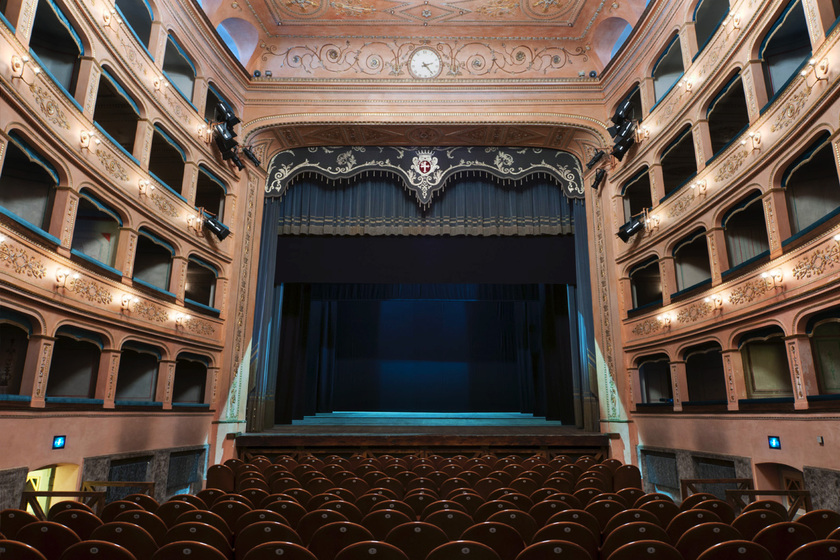
Photo © Teatro Rossini di Lugo
... can be described a conservative maintenance operation, despite the building was in particularly degraded conditions.
«... the best compliment that we hope will be that that will say: ''The theatre does not seem even restored.
This is the same theatre of immemorial times, the theatre we had in our memory''.
Or even: ''It is the theatre that we imagined it had been, even if we never saw it''.»
The layout of the hall, in the shape of a bell, is designed ...
«... the best compliment that we hope will be that that will say: ''The theatre does not seem even restored.
This is the same theatre of immemorial times, the theatre we had in our memory''.
Or even: ''It is the theatre that we imagined it had been, even if we never saw it''.»
The layout of the hall, in the shape of a bell, is designed ...
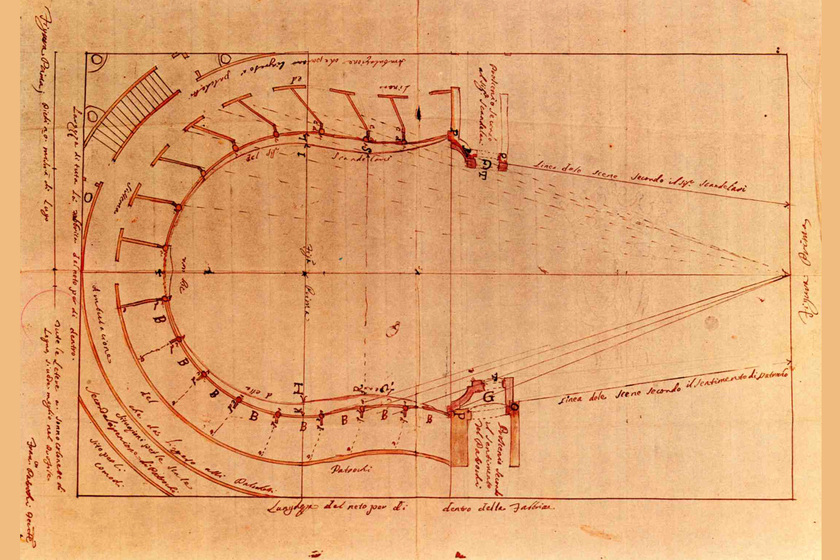
Photo © Archivio Comunale di Lugo
... by the ticinese architect Francesco Ambrogio Petrocchi, who, in 1759, built the external walls, the roof, and ended, perhaps, the front.
Petrocchi was in dispute for the project of the interior of the theatre with the Bolognese architect Scandellari, and the dispute had to be so hard to suggest to the administrators of Lugo to entrust the completion of the theatre no to the very important ''architetto imperiale di Carlo VI imperadore'' Antonio Galli Bibiena, among the greatest Italian set designers and architects of the '700 (then he will devote to the Teatro Comunale of Bologna, since 1763, and to Teatro Scientifico of Mantua, since 1767).
Petrocchi was in dispute for the project of the interior of the theatre with the Bolognese architect Scandellari, and the dispute had to be so hard to suggest to the administrators of Lugo to entrust the completion of the theatre no to the very important ''architetto imperiale di Carlo VI imperadore'' Antonio Galli Bibiena, among the greatest Italian set designers and architects of the '700 (then he will devote to the Teatro Comunale of Bologna, since 1763, and to Teatro Scientifico of Mantua, since 1767).
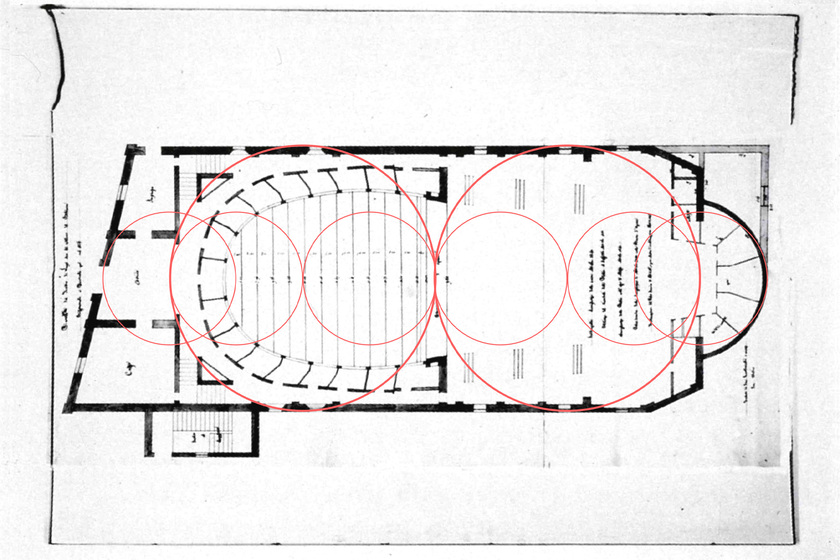
Photo © Archivio di Stato di Ferrara
This horseshoe-shaped layout is instead that of the restructuring carried out in 1819 by Mantua's architect Leandro Marconi, which in addition to changing the curve of the boxes added the gallery and changed the structure of the proscenium, giving to the Teatro Rossini of Lugo the appearance restored from the restoration of 1986.
But the proportions of the theatre remain those of the original structure designed by Petrocchi, intact today, that shows a metric modular plan - which coincids with the elevation – where to the cavea and to the stage are reserved the identical perfect proportions.
But the proportions of the theatre remain those of the original structure designed by Petrocchi, intact today, that shows a metric modular plan - which coincids with the elevation – where to the cavea and to the stage are reserved the identical perfect proportions.
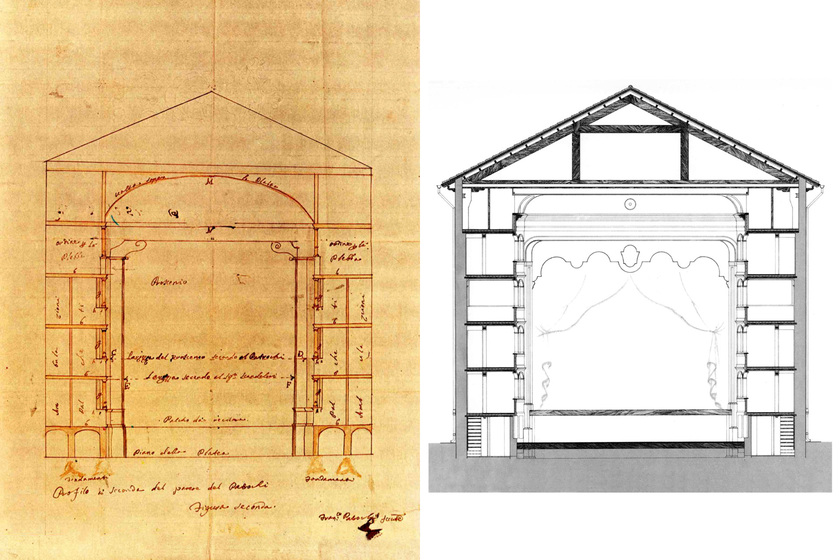
Photo © Archivio Comunale di Lugo
The comparison between the cross-section of Petrocchi and the restoration project of the 1986 confirms how the structural system of 1759 has come to our day essentially unchanged.
The biggest difference concerns the flattening of the vault of the hall, introduced by Marconi in 1819, in order to enter a gallery above the fourth order of the boxes.
The only remaining trace documenting the original appearance of the boxes designed by Bibiena ...
The biggest difference concerns the flattening of the vault of the hall, introduced by Marconi in 1819, in order to enter a gallery above the fourth order of the boxes.
The only remaining trace documenting the original appearance of the boxes designed by Bibiena ...
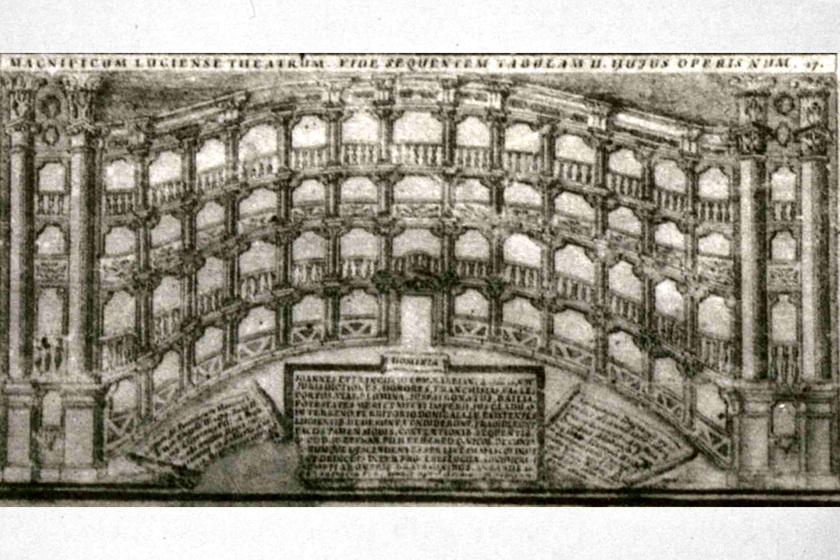
Photo © Archivio Comunale di Lugo
... who kept the bell curve as it was designed by Petrocchi, is this one.
Cervellati says about the opera by Bibiena in Lugo:
«...he intervened about many things, but mostly worked in the realization of the scenographies, the proscenium, the decorations of the boxes. His intervention must have been decisive about the conclusive result of the big hall and must have been his work on the surfaces, as a decorator and set designer, but about the structure and the setting of the hall and of the boxes ...»
Cervellati says about the opera by Bibiena in Lugo:
«...he intervened about many things, but mostly worked in the realization of the scenographies, the proscenium, the decorations of the boxes. His intervention must have been decisive about the conclusive result of the big hall and must have been his work on the surfaces, as a decorator and set designer, but about the structure and the setting of the hall and of the boxes ...»
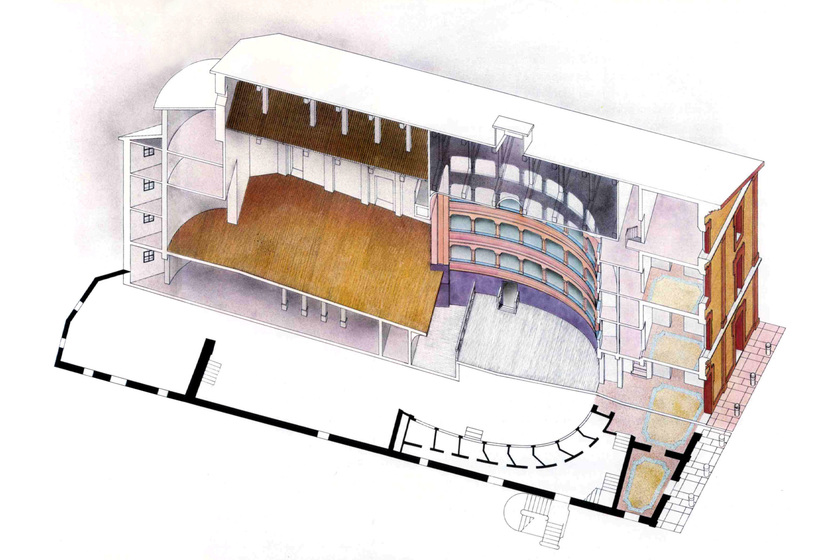
Photo © Archivio Comunale di Lugo
«... the author remains the Petrocchi or rather, the facts deductible from current emphasis is very similar to the sketch by Petrocchi.
It is not a coincidence that in the theatre of Lugo the space reserved to the stage is the same - millimetre by millimetre identical - to that occupied by the cavea (i.e. the space reserved to the public).
In the early twentieth they talked a lot of ''total theater''.
A theatre that was totally engaging - spectators and actors - in a single choral action.
Now, even the most avid assertors of the ''total theater'' recognize in the Italian-style theatre ...»
It is not a coincidence that in the theatre of Lugo the space reserved to the stage is the same - millimetre by millimetre identical - to that occupied by the cavea (i.e. the space reserved to the public).
In the early twentieth they talked a lot of ''total theater''.
A theatre that was totally engaging - spectators and actors - in a single choral action.
Now, even the most avid assertors of the ''total theater'' recognize in the Italian-style theatre ...»
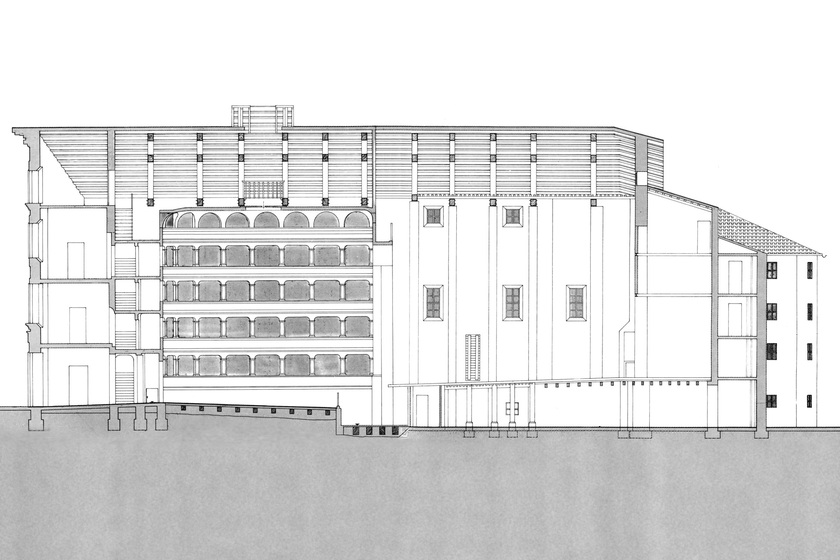
Photo © Archivio Comunale di Lugo
«... the true and the only theatre in which the communion of functions and parties is realized.
It could not be otherwise, because the Italian-style theatre comes from the square, was born from the installations that were built in public places during jousts, tournaments, events in which the participants - as in the religious processions in the Middle Ages - see and act simultaneously.
The theatre, then, can be considered the covered equivalent of the square.
And, as such, on can justify and understand ...»
It could not be otherwise, because the Italian-style theatre comes from the square, was born from the installations that were built in public places during jousts, tournaments, events in which the participants - as in the religious processions in the Middle Ages - see and act simultaneously.
The theatre, then, can be considered the covered equivalent of the square.
And, as such, on can justify and understand ...»
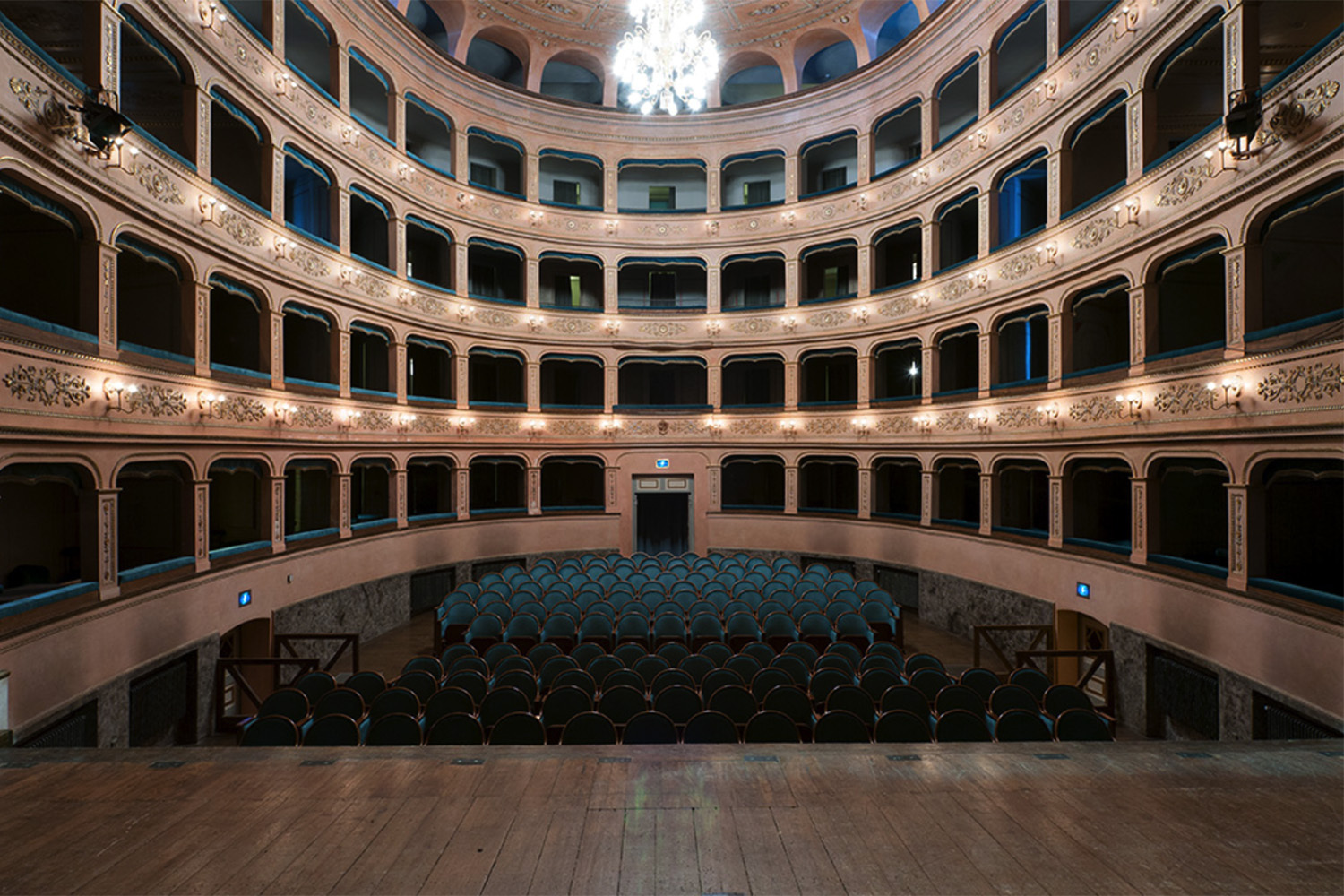
Photo © Teatro Rossini di Lugo
«... the constant renovations and continuous transformations.
The installations, the baroque decorations, were aimed at one particular event and were interchangeable, ephemeral.
The same happens when the square used for theatrical event becomes a covered place and the performances, gradually, have a tendency to codify in specific categories: then, the structure is improved in a continuous arrangement.
The same invention of the boxes comes from the balconies arranged on the squares.»
The installations, the baroque decorations, were aimed at one particular event and were interchangeable, ephemeral.
The same happens when the square used for theatrical event becomes a covered place and the performances, gradually, have a tendency to codify in specific categories: then, the structure is improved in a continuous arrangement.
The same invention of the boxes comes from the balconies arranged on the squares.»
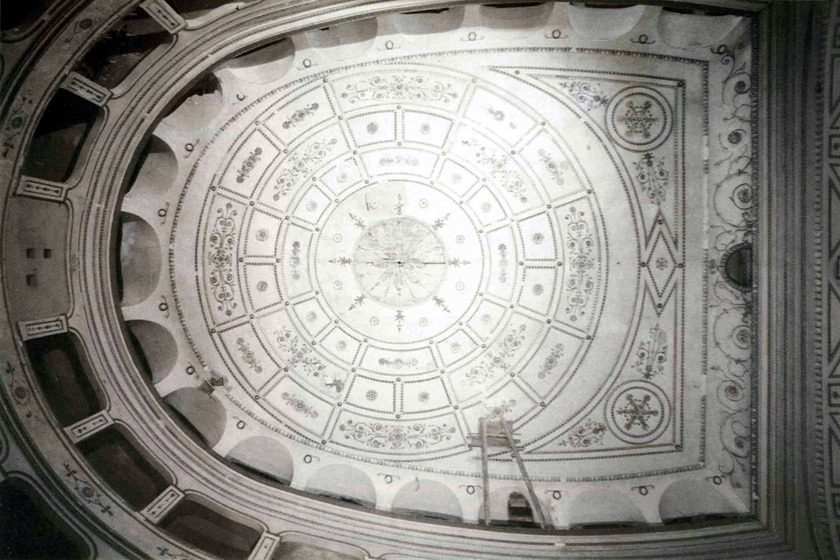
Photo © Archivio Comunale di Lugo
The ceiling, propped to avoid the collapse of a side, as it was before the restoration, while the central box of the fourth order is still adapted to a cabin for cinematographical projections.
The history of the theatre of Lugo is a paradigm of the fate of many Italian theatres from their origin in eighteenth century until today: readapted at the beginning of nineteenth century to the taste and needs of that time, with structural changes, after a few years suffer interventions for maintenance of the surfaces, for instance ...
The history of the theatre of Lugo is a paradigm of the fate of many Italian theatres from their origin in eighteenth century until today: readapted at the beginning of nineteenth century to the taste and needs of that time, with structural changes, after a few years suffer interventions for maintenance of the surfaces, for instance ...
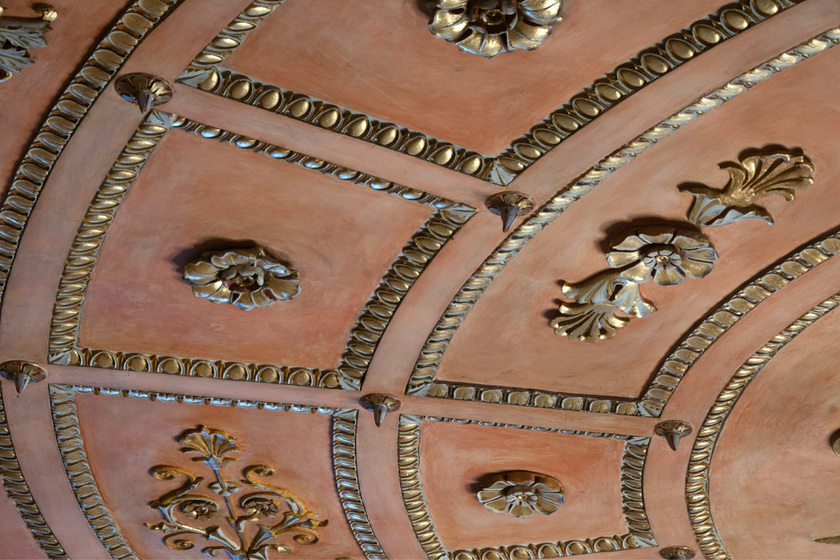
Photo © Teatro Rossini di Lugo
... the stuccos of the Teatro Rossini of Lugo, sober and elegant, were executed in 1855 by the decorator Benedetto Crescentini.
At the beginning of the Twentieth Century many theaters are subjected to renovations of fixtures and fittings, to be re adapted, in the Years 1920s and 1930s, to the cinematographical projections.
Then, with the arrival of the television ...
At the beginning of the Twentieth Century many theaters are subjected to renovations of fixtures and fittings, to be re adapted, in the Years 1920s and 1930s, to the cinematographical projections.
Then, with the arrival of the television ...
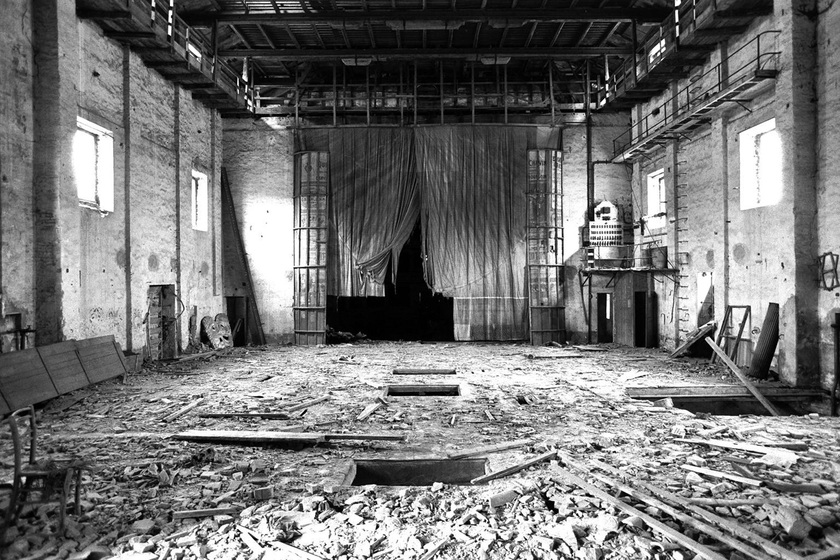
Photo © Archivio Comunale di Lugo
... three decades of neglect, deterioration and destruction began .
Until it appears at the horizon, in the Years 1980s and 1990s, the conscience of what is going lost and begin the interventions of recovery, unfortunately not all exemplars as that of the Teatro Rossini of Lugo.
Koki Fregni remembers:
«The condition of the stage before the beginning of the works was in a state of impressive deterioration.
Remade the floor of the stage in seasoned poplar ...»
Until it appears at the horizon, in the Years 1980s and 1990s, the conscience of what is going lost and begin the interventions of recovery, unfortunately not all exemplars as that of the Teatro Rossini of Lugo.
Koki Fregni remembers:
«The condition of the stage before the beginning of the works was in a state of impressive deterioration.
Remade the floor of the stage in seasoned poplar ...»
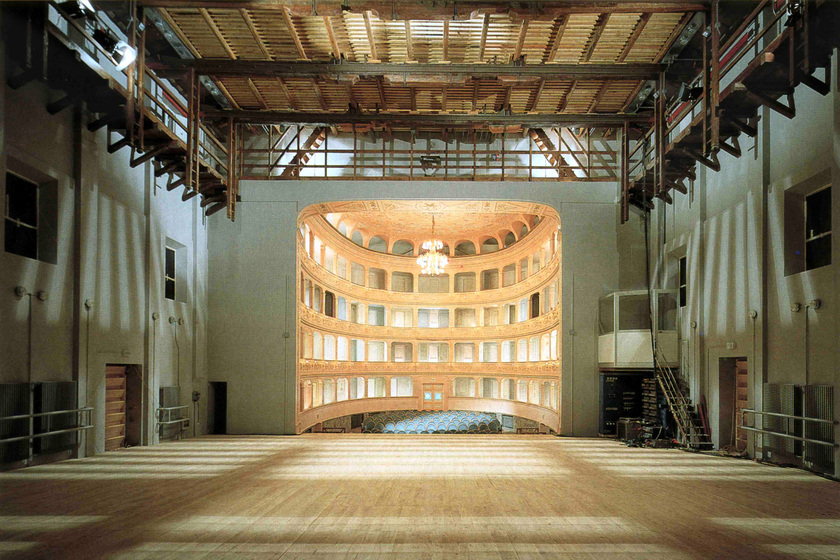
Photo © Maurizio Buscarino
«... as in the best tradition of Emilia-Romagna's theatres, modular, with trapdoors opened on demand in central areas, it has the characteristic of being assembled entirely from below, making the top uniform and without unpractical riveting.
A tackle and a trapdoor will bring from the understage, from the floor of the stage, the background bridge, ropes and equipment directly on the flyloft.
The reconstruction was realized with the same quality of lumber, although improved with the technique of nailing and joint of passed times.
Always in harmony with the place ...»
A tackle and a trapdoor will bring from the understage, from the floor of the stage, the background bridge, ropes and equipment directly on the flyloft.
The reconstruction was realized with the same quality of lumber, although improved with the technique of nailing and joint of passed times.
Always in harmony with the place ...»
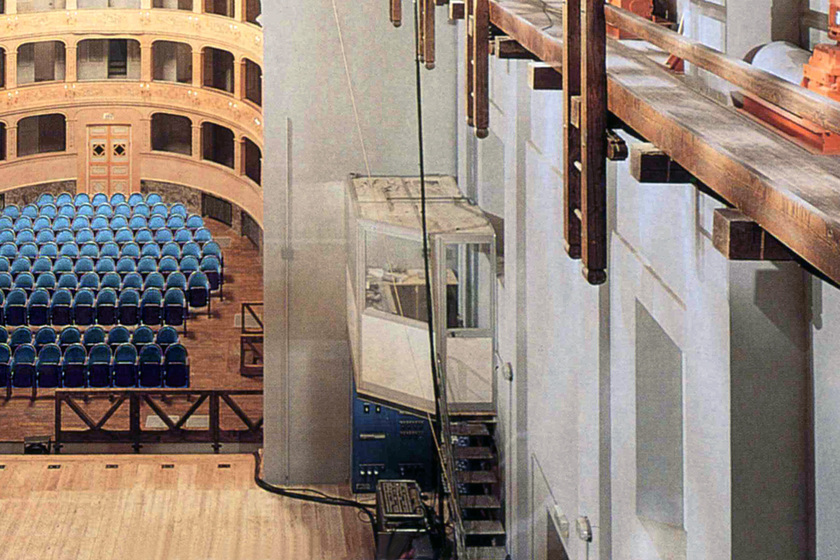
Photo © Maurizio Buscarino
«... but especially with the kind of programming which will be taken forward, the stage was endowed with a cabin that is more than enough to deal with important shows too, but without transforming the stage in a power station.
The command console lights, in an elevated cabin which incorporates a previous situation: it is convenient for the operator and easily reachable from the stage manager.»
The command console lights, in an elevated cabin which incorporates a previous situation: it is convenient for the operator and easily reachable from the stage manager.»
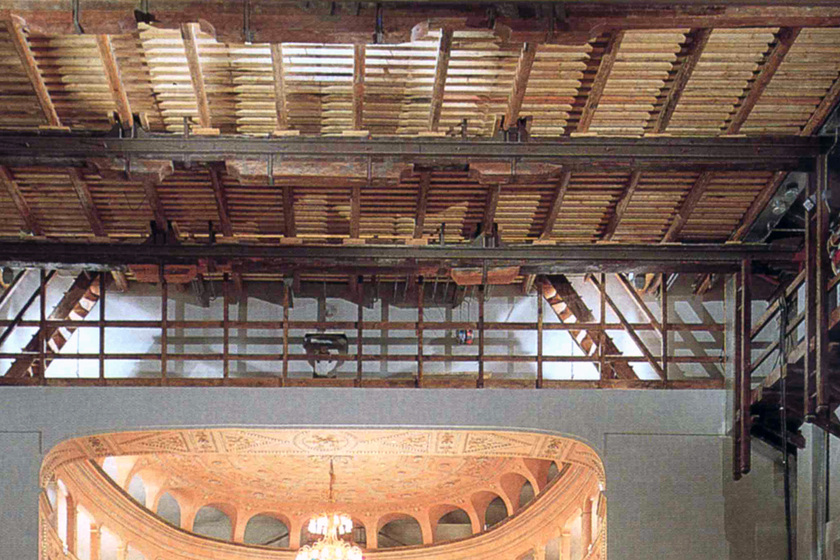
Photo © Maurizio Buscarino
«The Flyloft, a primary element of Italian theatre, has been completely rebuilt following a medium modulation, drawn from a series of comparisons amongst the theatres in the region, including the Fixed blocks for flyloft and a series of mechanical fly facilities to facilitate the technique operations.
The building in a workmanlike manner of two catwalks and a fly gallery even if on different levels, enriched with particulars useful to the machinery ...»
The building in a workmanlike manner of two catwalks and a fly gallery even if on different levels, enriched with particulars useful to the machinery ...»
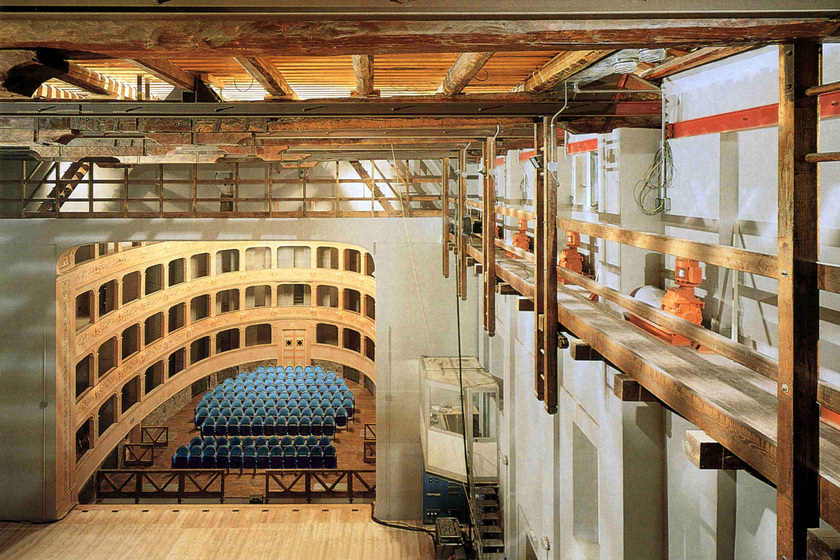
Photo © Maurizio Buscarino
«... took account of what remained of the original structure as well as the link between galleries, proscenium, flyloft.
At first sight it was obvious that the relationship between the cubage of the scene and of the hall was almost perfect and that the walls enjoyed generally good health, contrarily to the stage machineries and scenographical equipments.
It was well considered the desire to restore the stage in harmony with the rest, and since of the Eighteenth Century it was preserved the carrying structure and very little else, the date chosen for aesthetics and mechanics ...»
At first sight it was obvious that the relationship between the cubage of the scene and of the hall was almost perfect and that the walls enjoyed generally good health, contrarily to the stage machineries and scenographical equipments.
It was well considered the desire to restore the stage in harmony with the rest, and since of the Eighteenth Century it was preserved the carrying structure and very little else, the date chosen for aesthetics and mechanics ...»
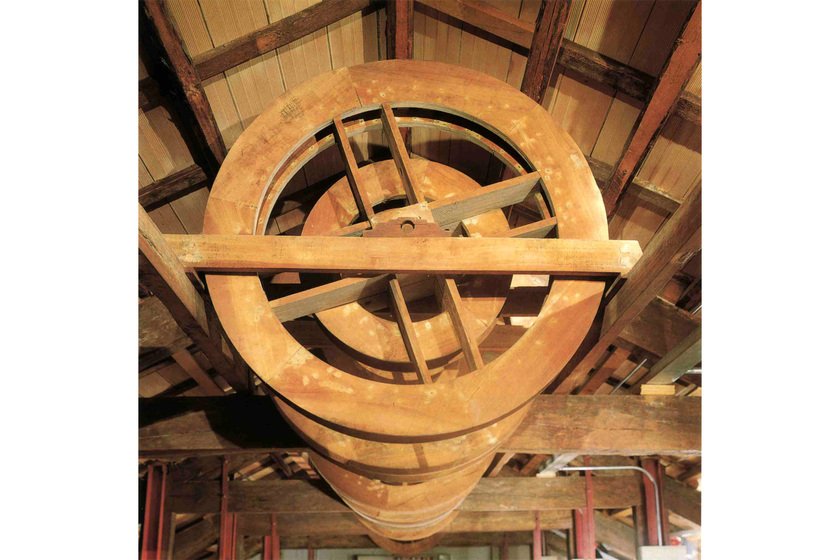
Photo © Maurizio Buscarino
«... was that of a generic Nineteenth Century.
To tell the truth during an entire century there were not determinating turning-points in the staging of the shows.
So what was served until the last post-war was in good part certainly original but irrecoverable to allow its use.
One exception that characterizes fortunately the scenographical allocation of flyloft was a number of wheel winches that in some occasions can be used even today.»
To tell the truth during an entire century there were not determinating turning-points in the staging of the shows.
So what was served until the last post-war was in good part certainly original but irrecoverable to allow its use.
One exception that characterizes fortunately the scenographical allocation of flyloft was a number of wheel winches that in some occasions can be used even today.»
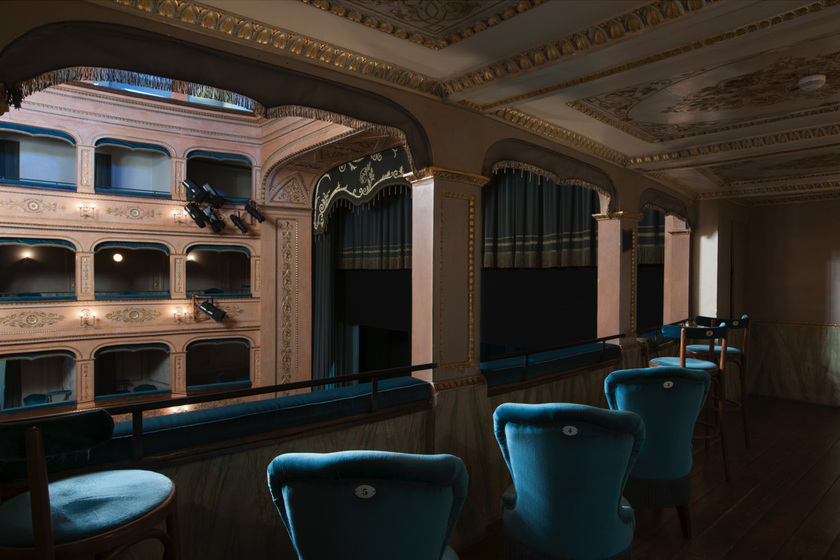
Photo © Teatro Rossini di Lugo
Pier Luigi Cervellati justifies the choice of colours in the following way:
«It is not conceivable to diversify the seats and the hall small curtains from the colour of the main curtain, everything would result disarranged, perhaps random.
Marconi was a purist, he wanted the opening of the boxes to be very clear, but it's a mistake, perhaps even for the same acoustics ...»
«It is not conceivable to diversify the seats and the hall small curtains from the colour of the main curtain, everything would result disarranged, perhaps random.
Marconi was a purist, he wanted the opening of the boxes to be very clear, but it's a mistake, perhaps even for the same acoustics ...»
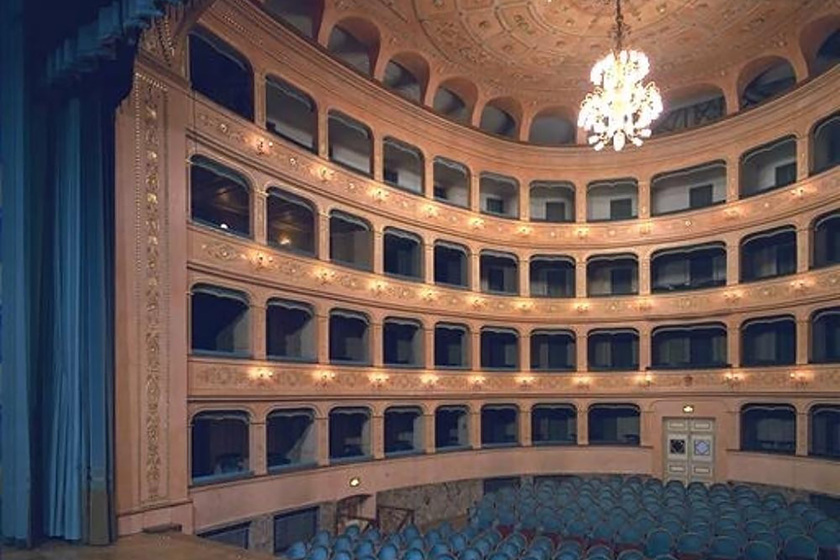
Photo © Teatro Rossini di Lugo
«... to eliminate teasers, padding and several curtains.
I chose a blue-greyish colour which I think it matches very well with the background colour of the frescoed boxes, emphasizing the architectural structure of the hall and thus allowing the reconstruction in all its parts of the upholstering cloth without these overlap alternating the character of the theatre at the beginning of the Nineteenth Century.»
I chose a blue-greyish colour which I think it matches very well with the background colour of the frescoed boxes, emphasizing the architectural structure of the hall and thus allowing the reconstruction in all its parts of the upholstering cloth without these overlap alternating the character of the theatre at the beginning of the Nineteenth Century.»
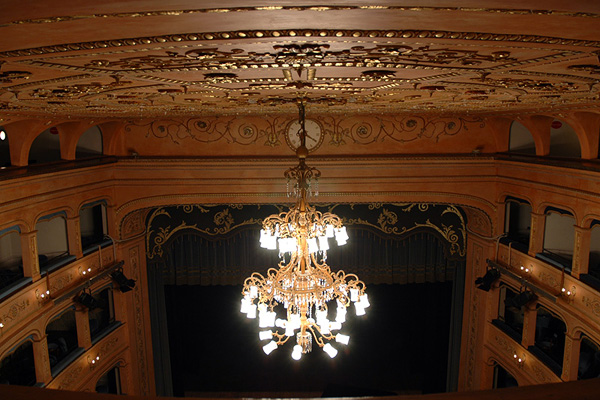
Photo © Teatro Rossini di Lugo
«The aura of Nineteenth Century theatre, a theatre that has however its origins in the Eighteenth Century, should continue to exist, otherwise the risk is to mistake the Teatro Rossini of Lugo for a cinema before the war that pompously aspires to be a theatre.
The blue-grey ...»
The blue-grey ...»
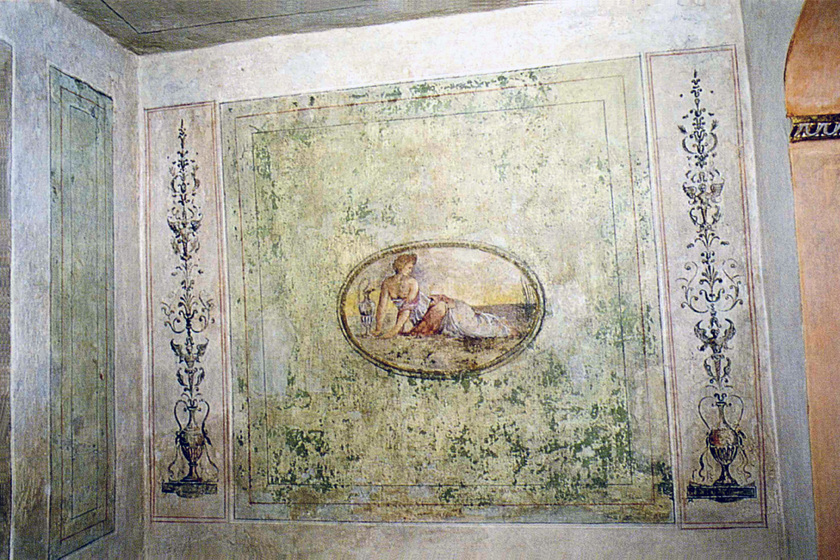
Photo © Maurizio Buscarino
«... is also the colour of plaster of access corridors of the boxes and in general of the internal walls and is imprinted like it would be a veiling, a patina given by the time on the surfaces restored as tehy were in the past.»
Examples of the decorations ''a grottesche'' of the stages, with cartouches, floral motifs, ribbons, inserted into simple geometric panels.
They were realized in 1821 ...
Examples of the decorations ''a grottesche'' of the stages, with cartouches, floral motifs, ribbons, inserted into simple geometric panels.
They were realized in 1821 ...
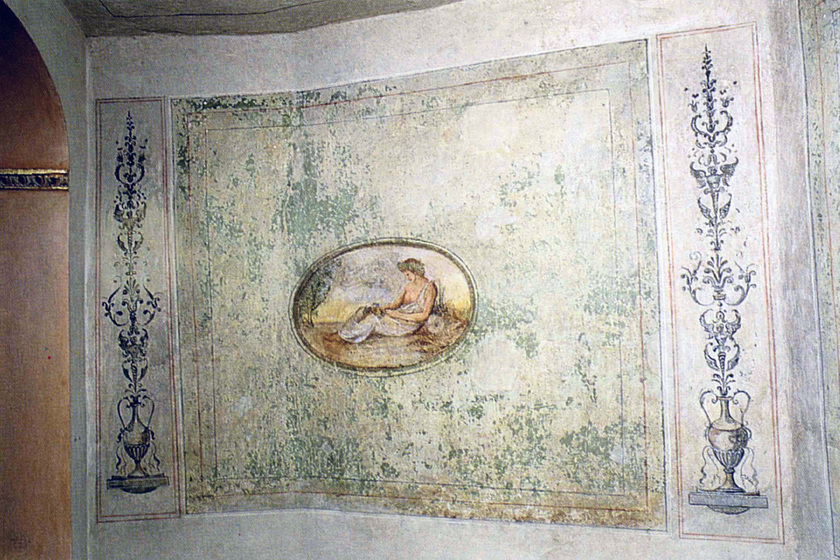
Photo © Maurizio Buscarino
... and they were restored scientifically, their presence has influenced the chromatic choices of the restoration.
Pier Luigi Cervellati explains:
«The colour of the upholstering cloth, from the curtain, to draperies and teasers, risks of becoming obsessing.
The red colour velvets, present also in this theatre in residual teasers and in the padding of the stages ...»
Pier Luigi Cervellati explains:
«The colour of the upholstering cloth, from the curtain, to draperies and teasers, risks of becoming obsessing.
The red colour velvets, present also in this theatre in residual teasers and in the padding of the stages ...»
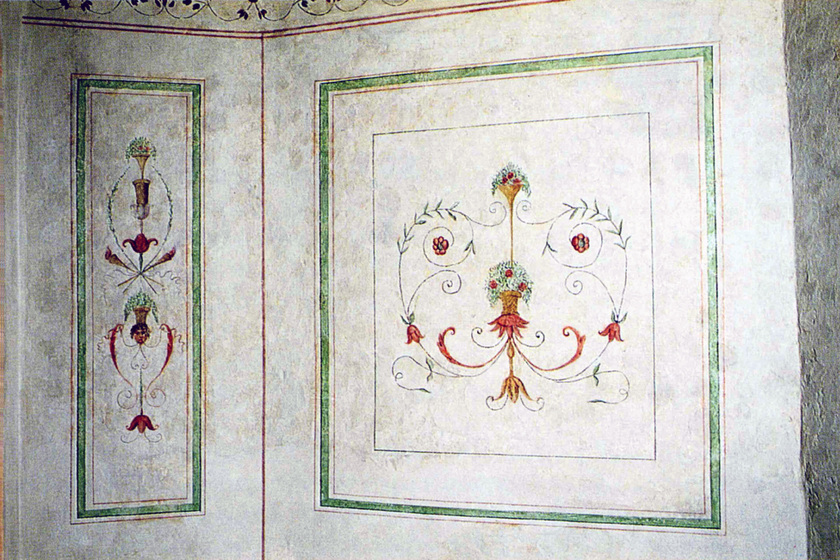
Photo © Maurizio Buscarino
«... contrast with the blue green of the curtain and the same could be repeated if the inside of the stages were covered with stucco again.
Emphasizing instead the historical frescoes ...»
Emphasizing instead the historical frescoes ...»
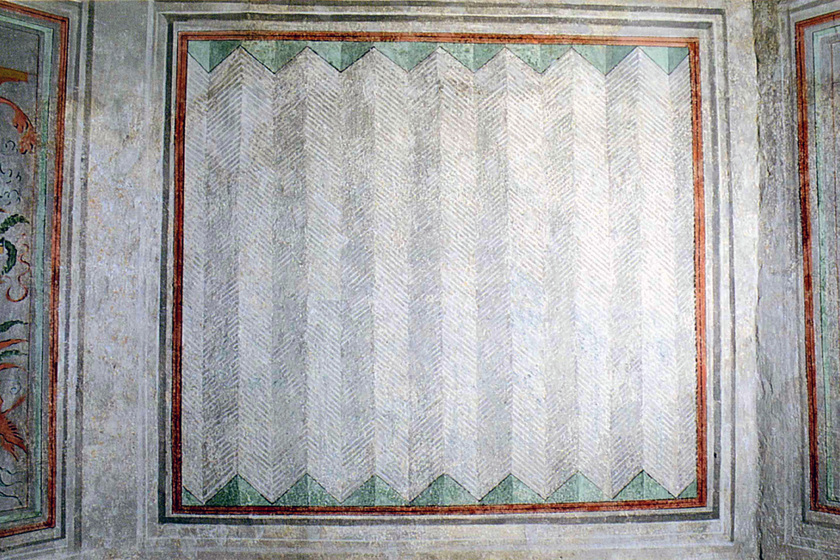
Photo © Maurizio Buscarino
«... this colour becomes strident, it certainly appears unusual, incongruous.
From the documents we are not able to have the basic colour of the theatre by Bibiena and neither by Marconi.
And then the red in the inside of a theatre is always a bit too encrypted, almost pleonastic, certainly uncritical.»
All quotations by Koki Fregni and Pier Luigi Cervellati are taken from:
Pier Luigi Cervellati, The Rossini of Lugo - About the restauration of a famous theatre, Nuova Alfa Publishing, 1986.
From the documents we are not able to have the basic colour of the theatre by Bibiena and neither by Marconi.
And then the red in the inside of a theatre is always a bit too encrypted, almost pleonastic, certainly uncritical.»
All quotations by Koki Fregni and Pier Luigi Cervellati are taken from:
Pier Luigi Cervellati, The Rossini of Lugo - About the restauration of a famous theatre, Nuova Alfa Publishing, 1986.